Showing posts with label saints. Show all posts

Wednesday, July 1, 2015

Junipero Serra, Alexander Hamilton, and Presidency Obsession

Fr. Junipero Serra in Statuary Hall
Image via Architect of the Capitol 
Today is the feast of Blessed Junipero Serra, the 18th century Spanish Franciscan priest who established the California missions. Fr. Serra will have another big day this fall, when Pope Francis canonizes him while visiting Washington, DC. This honor has sparked new interest in his story, including some protests decrying the negative medical and social effects missionaries had on native peoples. The story of Serra's missionary work is indeed complicated, as he both imposed harsh physical discipline but also advocated for native people against abuse by Spanish soldiers. Even if his evangelization techniques were heavy-handed, it’s undeniable that Serra began the legacy of Hispanic peoples in California that continues to this day.

Despite all this publicity, a memorial of Serra is now at risk. California’s legislature is considering a motion to remove Fr. Serra's statue in the US Capitol and replace it with one of astronaut Sally Ride. While the first woman in space deserves recognition too, the statue swap proposal comes at an unfortunate time, particularly since Serra's canonization will coincide with the first trip to America by a Latino pope, and the first time a pope will address Congress. 

The Serra statue situation is not unlike the recent news about Alexander Hamilton’s place on the ten dollar bill. Hamilton is enjoying a surge of recognition too, as the star of a smash hit musical opening on Broadway later this month. Thanks to new biographers, he’s moving out of the obscure historical shadows. As the first Secretary of the Treasury and architect of the US financial system, his face on money seems like an obvious choice. But now he is being removed to make room for the first female figure on American paper currency.

Debates over Serra and Hamilton’s small monuments make it seem like gender recognition in history is a zero-sum game. If we honor significant women, particularly modern ones, that means we must demote the contributions of past centuries’ “great men”. I argue that there is room for both. Sally Ride and Harriet Tubman need not compete with Serra and Hamilton. The real rival here is the over-publicized presidency. Both men are being obscured because Americans like to go with the obvious and recognize presidents over and over again.

Take Serra’s spot in the National Statuary Hall Collection, for example. The collection was established in 1864 as a way to use to the vacant space of the old House of Representatives chamber. Each state could submit two statues of notable citizens. The early 1880s - 1920s roster consisted of Revolutionary War figures, settlers, Civil War soldiers, and now obscure 19th century politicians, plus the odd inventor or two. As the ranks have grown, statue displays have spread throughout the Capitol complex. When I worked the US Capitol Visitors Center, the different figures provided a fun scavenger hunt and conversation starter with visitors.

Since 2003, states may swap out existing statues for new honorees. Subjects must be deceased, and states are responsible for funding and commissioning new artwork. One reason for this new rule was to help diversify and update the collection a bit, swapping out the 19th century politicians no one remembered anymore.

Unfortunately, many states that have changed their statues have gone with the obvious option of, you guessed it, presidents. Dwight D. Eisenhower of Kansas and Gerald Ford of Michigan have joined Statuary Hall. California made a similar switch in 2009, swapping Unitarian abolitionist Thomas Starr King for President Ronald Reagan. That left Fr. Serra's 1931 statue as the only potentially free California spot. So instead of Ride joining Serra to complete California’s exploratory legacy, Statuary Hall will become more like the greatest hits of the 1980s.

Similarly, Alexander Hamilton is on the chopping block because the Treasury is too attached to President Andrew Jackson. A recent grassroots movement called to replace Jackson’s image on the twenty dollar bill with a notable historical women. There was even a poll that selected Harriet Tubman. Instead, the Treasury has decided that women are only worth half that, and offered us a bureaucratic accountant instead of a controversial chief executive.

It’s troubling that our national memory can trend toward simply the most famous, the most powerful. This implies that we’re only smart enough to read history as an “icons” roundup in People Magazine. One of my favorite confused tourist stories was the time I overheard a woman explaining the World War II Memorial while walking down the National Mall. She pointed to the group of columns symbolizing the sacrifices of soldiers from every state and said "Look! That's where all the presidents are buried!" Facepalm.

In my opinion, the Statuary Hall collection is best as a federal pantheon of "lay" citizens and the legislators who served them. The Capitol represents the legislative branch and is meant to be the "house of the people," not a shrine to unilateral power. Likewise, our money isn’t exclusively for presidents. Hundred dollar “Benjamins” celebrate an inventor, author, and diplomat who never lived in the White House.

Later this week we’ll celebrate America’s independence, a feat that was the work of many people. It would not have happened without the George Washingtons and Thomas Jeffersons, but neither would the Revolution have made it without the lesser-known men and women who supported their ideas and did the hard, daily work of fighting for freedom. We don’t have a king on our money, and there is room for all of us in America’s story. 

Sunday, January 19, 2014

Recognizing Your Saints


This month's Bright Maidens blogging prompt is about saint stories. The Communion of Saints is one of my favorite things about being Catholic. As an historian, I love this personal connection to the past. (Who wouldn't want to communicate with their personal heroes from past centuries?) The holy people we hear about in scripture and Church history aren't just distant, foreboding role models of unattainable perfection. They're our brothers and sisters who root for us and want to be our friends.

Finding your patron saints is an unpredictable process.Sometimes you're naturally drawn to someone whose personality is like yours or whose story excites you. At other times someone unknown collides with your life in an unexpected way. There are too many saints to know them all, however, and you can't force a patron connection. Just because a friend has a fanatical devotion to St. Anthony doesn't mean you must, too. Believe me, I have tried many times to make St. Therese of Lisieux happen, but we just don't seem destined to be BFFs. Instead, my journey through life has brought other interesting holy people into my path.

When I was a 14 year old confirmandus, I decided to be an ornery hipster and pick an underdog saint no one else had ever heard of. Cecelia, Teresa, and Mary were waaay too played out. An obscure Catholic coloring book led me to St. Philomena, an early virgin martyr so obscure she doesn't have a feast day anymore. But her execution story was epic, the stories of miracles surrounding her relics were exciting, and more mainstream St. John Vianney was a fan. Looking back, she was actually the perfect choice for my future career. Contested historical narratives, 19th century archaeological finds, and popular cults surrounding artifacts are some of my favorite research topics. Whether Diocletian really had the hots for her or not, the spiritual significance of her intercession can't be denied.


Since then I've found new favorite saints in a way that suggests they have chosen me, or at least that Divine Providence has led me to them. St. Vincent de Paul meant nothing to me until a Methodist friend of a friend in college told me about the Vincentian Service Corps and got me started on my service year in Missouri. While I was there I gained new affection for not only the Vincentian family of saints, but also St. Louis, King of France. This summer I got married in a church that happened to be named after St. Veronica, whose name means "true image." This could make her the patron of photography, a hobby my husband and I have shared since our earliest dates.

Lately I've been on the lookout for saintly role models who were married women, not teenage girls who swore off boys and then met violent ends. Ironically, this has brought me back to the very beginning of my patron saint history - the ones who share my name. My middle name is Elizabeth. When I was a little girl, I liked St. Elizabeth of Hungary of best since she was a queen, and therefore had the prettiest clothes. Recently I've realized that she, and Mother Seton, and even John the Baptist's mother, were all married women who loved their husbands and children. As I embark on a new phase of life living my vocation as a wife, I feel like these women are reaching out to their namesake, offering their support.

 Domenico Ghirlandaio,  Zacharias Writes Down the Name of his Son
1486-90, 
Fresco Cappella Tornabuoni, Santa Maria Novella, Florence


Thursday, November 1, 2012

What Should Catholicism Call Me?*

Coming soon to a field trip near you
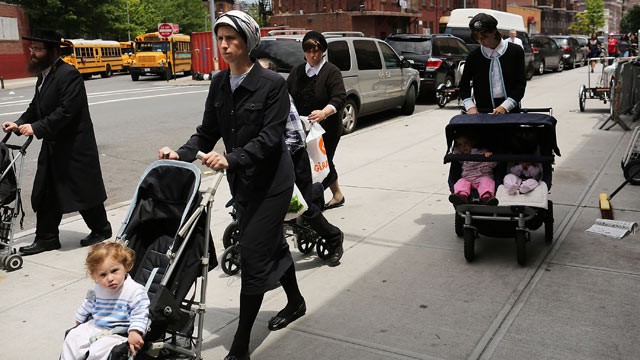
One of the great perks of my visitor center job is the people watching. Every day is a parade of different groups: family reunions in matching shirts, busloads of 8th graders, Buddhist monks, all manner of foreign military officers, middle-aged European couples in matching sweaters, Portuguese medical students in capes (??), Asian tour groups following their guide waving an umbrella, Congressional interns in questionable "businesswear.".My favorites, though, are the fringe religious groups whose outfits give them away. I can't help it, I am an American religion nerd. Mennonite head coverings, Pentecostal long denim skirts (plus the occasional big hairdo), or Orthodox Jewish prayer shawls and yarmulkes make me positively giddy when they come through the door.

Why do I want to run up and become BFFs with these people who follow strict dress codes? Is it because they have big families like mine? Or because I know I can speak their scriptural language to some degree? I think the main reason is how they wear their faith on their sleeves, literally. It warms my heart to see people unafraid to wordlessly advertise that they don't quite fit in with contemporary American culture. And, let's be honest, it's also good to know that no matter how counter-cultural my Catholicism is, there is always someone out there with stricter rules to follow.

At work I'm supposed to be bipartisan, impartial for visitors. You can't see my scapular or miraculous medal under my uniform blouse. Most visitors don't understand my enthusiasm for statues of Jesuit missionaries. Unlike my last job, I don't go to holy day Masses with the CEO. For a while I tried not to come on too strong. But after three people assumed I was Jewish (it's the hair and Levite last name), I figured I needed to come clean. News flash, everyone: I am 75% shiksha and a proud Papist.

Since then I've been very cautious about how my actions reflect on my religion. Am I kind enough, joyful enough? I worry about this in Catholic circles too. My family goes to a Latin Novus Ordo Mass and know obscure saint trivia like the back of my hand. Still, calling myself a "Trad" feels wrong - I like too many "guitar Mass" folk hymns for that. How will people know what I believe? How should I label myself?

This is silly, really. If you believe something, it will show. When co-workers ask, I gently explain that no, The Bethrothed and I don't plan to "get a place together" until we're married. I mention church in my weekend plans. I've had great conversations with Jewish and Muslim coworkers about what their faith means to them. A Methodist who teaches Sunday school congratulated me on our recent new saints. Gradually, I've figured out who the other cradle Catholics around work are. They don't share my Blessed Junipero Sera fandom, but that's ok.

Otherwise I don't butt to inform people that I disagree with their morality. If people are very set in their opinions, it's not worth instigating a water cooler brawl over assisted suicide or abortion in cases of rape. We deal with enough belligerent members of the general public. My prayer is that  I can represent well the communion of Saints to which I belong. I want to leave people with the impression that I trustworthy, principled and kind. Maybe then I can help change their confused impression that the Catholic Church is out to control their lives, not love them.

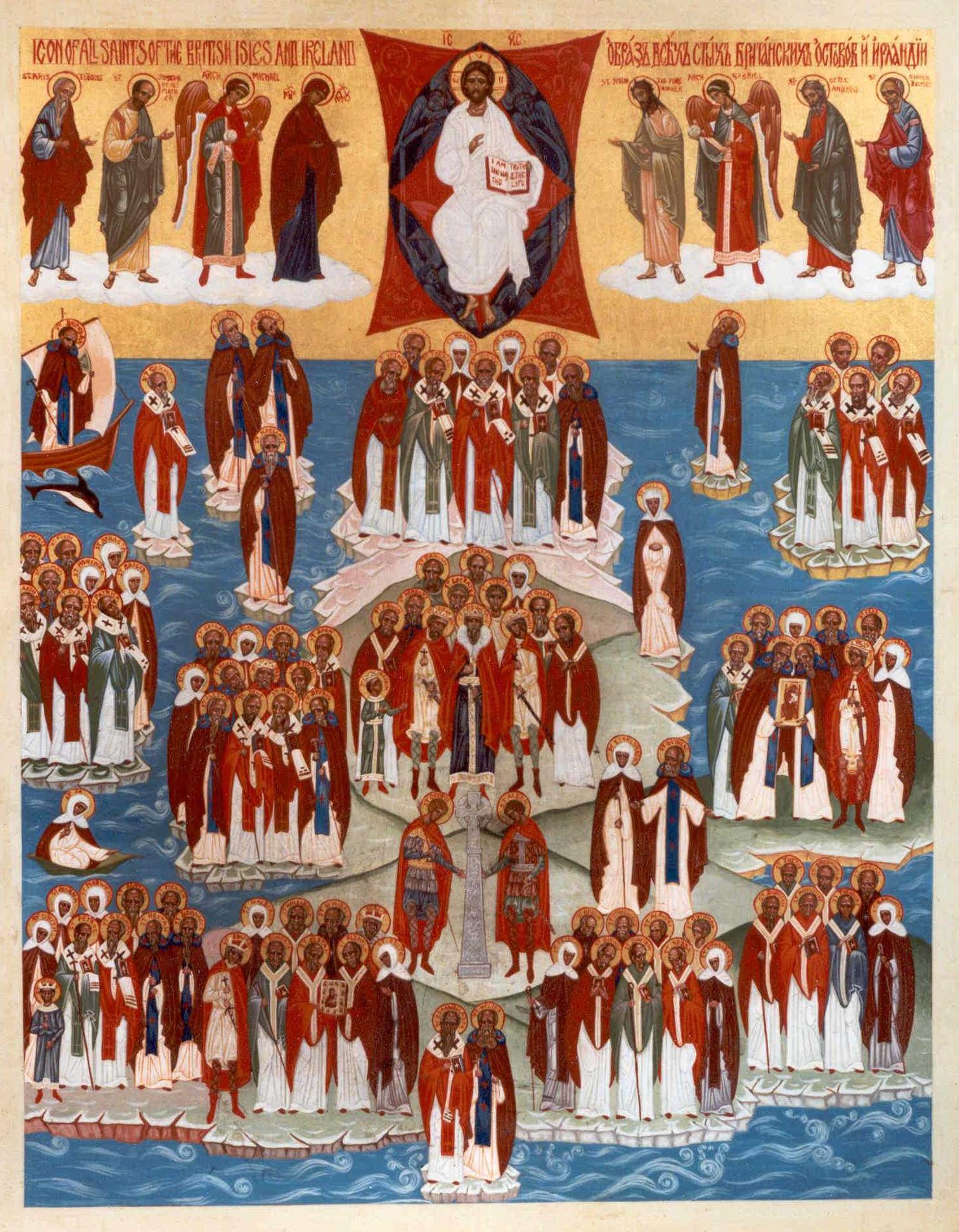
Saints of the British Isles
*H/T to the hilarious Tumblr blog of that name. Happy All Saints Day, everyone!

Tuesday, May 1, 2012

St. Joseph the Worker

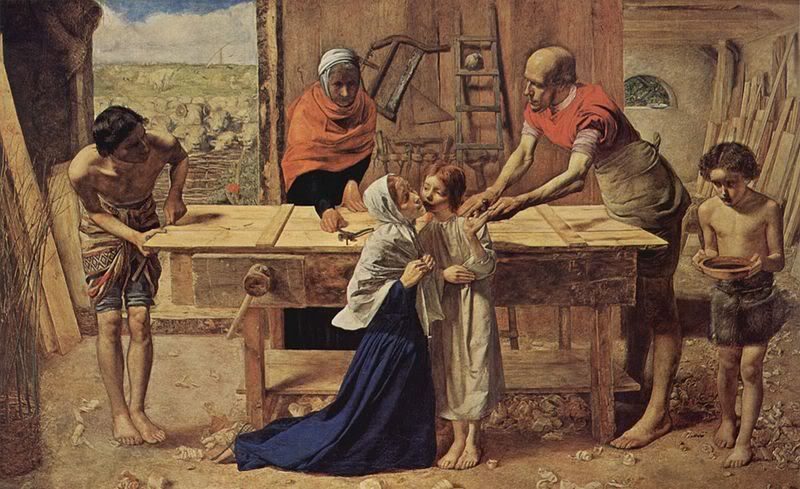
Teaching young Jesus how not to lose a finger to a plane.
Today is the feast of St. Joseph the Worker. This is a young saint day, established by Pope Pius XII in 1955 in response to Communist "May Day" celebrations. Other countries still observe May Day/International Worker's Day. (This includes my Romanian colleagues, lucky ducks.) Dear St. Joseph really does deserve extra days dedicated to his awesomeness. His wife has about a bazillion, after all. His vocation as spouse, parent, and laborer is something anyone can relate to.

Those are some legit clamps on that work bench. Source
I really could use some help in the labor department these days, since I'm still an underemployed twenty-something. The museum of my dreams liked me a lot, but decided to hire a good friend of mine instead. This one hurts. I hope that place and I can "still be friends," but this does feel an awful lot like a prom love triangle. To top it off, my awesome temp job is finally ending.

I feel terribly adrift, but really this change is the best thing to happen in a while. It's time for something new. Despite all the uncertainty, I have a feeling that God wouldn't let me lose my job unless He had something better in store. Guess I'll fire up the novenas again.

By John Collier. Via Terry Nelson at Abbey Roads

Last weekend I went to confession at a nearby church named for Jesus' foster father. As I knelt before his statue, I looked up and noticed the hatchet in Joseph's hands. And realized I'm an idiot.

Who better to ask for help in my job search than the patron saint of workers? Wouldn't Joseph love to examine some historic furniture with me? I'm sure he'd be great at identifying wood types or tool marks. Did he, like me, make a mess of things the first time he tried to use a gouge? Did he sneeze from all the wood shavings in his nose? I wonder what he would have thought of Thomas Chippendale's Director.

I tried some planing in Colonial Williamsburg last year. Photo courtesy of JRG. 
So St. Joseph the Worker, please pray for me to find a job. And pray for everyone adrift in this messy economy of ours, whether they are new graduates or old veterans hoping to retire. Remind us that no work is pointless if it's done for God.


Tuesday, April 17, 2012

Florence + The Machine + Divine Mercy

Somewhere in between thesis chapters I got hooked on the ethereal power-ballads of Florence + The Machine last year. Florence Welch's lyrics get more interesting with each listen. In particular, the song "Blinding" from her first album can have several different interpretations. At first glance, it's about a girl realizing she needs to break free of a toxic relationship. But one line tipped me off that it could also reference Mary Magdalene on Easter Sunday.
 "No more dreaming of the dead, as if Death itself was undone.
No more crying like a crow, for a boy, for a body in a garden

Noli Me Tangere, Lambert Sustris, late 16th century

In the song, realization of truth overwhelms the subject both emotionally and physically.
Felt it in my fist, in my feet, in the hollows of my eyelids
Shaking through my skull, through my bones, and down through my ribs.

Like a repentant sinner freed from the seven demons that plagued her, the song's subject has rejected her past ways forever.
No more dreaming like a girl, so in love with the wrong one...

And I could hear the thunder and see the lightning crack
All the world was waking, I never could go back. 

Mary Magdalene's encounter with Jesus, both during the thunderstorm at the foot of the Cross and then at His Resurrection in a garden, gave her the strength to change her life and brought her into a new reality of redemption.
Noli Me Tangere, Martin Schongauer, 15th century
Their meeting on Easter Sunday is one of the most poignant scenes in literature. Her heartbreak, confusion, and final joyful surprise get me every time. Jesus' line of "Woman, why do you weep?" is so succinct and compassionate. He doesn't tell her she's wrong or that she should shut up and stop crying. Instead, he gently reveals the redemptive truth that things are better than they seem. Those words were a great comfort to me on one spiritually difficult day in my teens, and they still are.

This is how I imagine Divine Mercy working. We come to God contrite, sorrowful, and He saves and forgives us with great Love. In the past year I've lost sight of that somewhat. I've let discouragement over my job search wear me down, and I've listened to the lying voices that tell me I'll never be good enough, that I have accomplished pathetically little in my 27 years, that God has forsaken me and the people I love. That is not the truth, and I have been slowing waking up to the reality that God's plan is always good, even if it's not my own.

Continuing my novena addiction, I prayed the Divine Mercy novena this past week. On day 4 I got an interview with one of my favorite museums, and on day 9 another company asked to interview me.I don't deserve it, but God has been very merciful, and I feel rich in Faith, Hope and Love.


Thursday, December 22, 2011

Advent Wreaths Take 3


Last weekend The Beau and I took a field trip to the Cathedral Basilica of the Sacred Heart in Newark, NJ. It was worth the 45 minute drive. The fifth largest basilica in the United States, it was by far one of the most magnificent churches I've seen in this country. I haven't been this bowled over since I spent a year exploring the Cathedral Basilica of St. Louis.


Planned in 1859, the cathedral was the brainchild of Newark's first bishop, Rev. James Roosevelt Bayley. He was a nephew of St. Elizabeth Seton and a Roosevelt on his mother's side. Like his aunt, he converted from the Episcopal and was subsequently cut out of his parents' will. Bayley grew the fledgling Newark diocese into a flourishing Catholic community, introducing religious orders and encouraging education. He was also history buff who organized church archives and wrote some histories of early American Catholicism. My kind of guy.


Construction began in 1899, and the French Gothic style cathedral hosted its first mass in 1928. It wasn't until the 1950s that the final interior decorations of stained glass windows and carved oak screens appeared.


In 1995 Pope John Paul II visited the cathedral and elevated it to a minor basilica. While he was in town he presided over evening prayer, with President Clinton in attendance.


It's the attention to detail that makes this cathedral so incredible. Every time I turned around I found something new to marvel at. Why yes, that is Judith holding the head of Holofernes in the center of that pediment over a side door.


The myriads of stained glass windows depict more saints than you can count, giving the impression that you are surrounded by the "great cloud of witnesses." I was excited to find one of my patrons in an apse side chapel.


So if you ever find yourself flying into the Newark airport, see if you can make your way to this American Gothic gem. It's not in the greatest neighborhood, but that makes its splendor all the more astonishing. The product of generations of hard work, it stands as a testament to the Communion of Saints we all hope to join in eternity.


Tuesday, November 1, 2011

I can see your halo, halo, halo

The Calling of St. Matthew; Caravaggio; 1599-1600; San Luigi dei Francesi, Rome
Today is the day to think about All the Saints, and I am reflecting on the many patrons to whom I owe thanks, some old and some new.

St. Jude and St. Therese have been unexpected novena friends. Today I realized that St. Matthew is the patron of accountants, and thus my pal now too. I always loved his conversion story.

Then there are the English martyrs that The Beau has been researching, like priest and poet Robert Southwell. Blessed John Henry Newman is more connected to my own "scholarship," and their spiritual descendant.

And then of course the strong women whose names I share. St. Philomena, the idealistic and brave teenager whom I claimed in Confirmation. Sarah, the patriarch's wife who laughed when God told her His plans. I like to think she regretted her hard-headed mistakes.

Also the Elizabeths - a queen of Hungary and an Episcopalian convert. Ms. Bayley Seton and I should be better friends - she lived in the early republic! She was a Vincentian! My high school is named for her! She's totally historically significant! Elizabeth Ann, please pray for your fellow American down here.

Since I'm a historian, the Communion of Saints is one of my favorite Catholic concepts ever. Those who went before us are not just words on a page - they're alive! We can talk to them, they can help us out just as if they lived down the street and sat a few pews over at Sunday Mass. There is such a tangible sense of power knowing I can make personal connections with the past.

All you holy men and women, pray for us. 

Wednesday, October 19, 2011

Epic Intercession: Now with 50% more novenas!

St. Jude Novena


Earlier this month I raved about the blog Pray More Novenas and how its email reminders got me through all nine days with St. Therese. Starting today, I am back on the novena bandwagon, joining over 5,000 Catholics to pray the St. Jude Novena, leading up to St. Jude's feast day on October 28.

 Do you have any ‘impossible causes’ to pray for? St. Jude is the patron saint of the impossible, and his intercession has helped people through tough times for centuries. On a personal level, I have some good friends who are particularly grateful to St. Jude, so I feel like he would be a good saint to get acquainted with. You can sign up for handy email reminders to get the the novena prayers here: St. Jude Novena

Friday, September 30, 2011

7 Quick Takes, Vol. 11


--- 1 ---
I just discovered the amazingly useful blog Pray More Novenas. It emails you the novena prayers every morning - idiotproof prayer. If you are like me and can never remember to keep up all 9 days, you should give this a try.
--- 2 ---
I blame these cute but sappy books. 
The novena I've been praying is for St. Therese's feast day tomorrow. To be honest, I have never been a big fan of hers. Usually she's portrayed as a saccharine ingenue, ringlets bouncing as she skips through life scattering rose petals. She charmed her parents, her sisters, even the Pope! Gag me with a spoon.

Honestly, her life wasn't really like that, so I should give her a break. This novena has been a surprisingly profound experience. I feel more at peace about life, more aware of God's presence. There are signs of the same thing happening for some of my novena intentions, too.

--- 3---
The accounting department at my office moved to a bigger room, which means I get my own desk! No longer am I perched on a 2.3' segment at the end of my boss' desk. I even have my own stapler and tape dispenser now. Feels like I am moving up in the world. 
--- 4 ---
Awesome - getting a pretty silver silk blouse as a swanky "hand me down" from my aunt. Awkward - tearing a seam in the slightly snug sleeve, and repairing it with said tape dispenser in a corporate restroom.
--- 5 ---
Yesterday I think I put 100 miles on my car driving to the chiropractor, work, and then a cocktail reception at an historic house in Georgetown. Even though the traffic here is ridonkulous, I still love driving toward DC. It feels like all of us commuters are headed somewhere exciting and important. Also, once I have crossed the Potomac I can start drooling over historic architecture.If I could hug an Italianate townhouse, I would.
--- 6 ---
If you've ever tried to look up Mass times online, you probably discovered that most parish websites are even more insufficient than the church's restroom facilities. For every visually appealing, user friendly site, there are ten thousand Web 1.0 monstrosities with tiny print, weird scrolling messages and the confession schedule buried deep in the menu under "community" or "about us."

You know what can be even worse? Catholic bookstores. This week I consulted one that described the store inventory as "appropriate gifts." Another had online purchasing, but no mentions of store hours. They received the wrath I normally reserve for job applications that require me to physically mail in a copy of an unsavable PDF form.
--- 7 ---
The liturgical calendar for October always makes me happy - woah, how did all these awesome saints get scheduled in the same week? In my own calendar there are tons of birthdays, too. Happy birthday to my BFF K.D. tomorrow, and to my Mom on Sunday!
For more Quick Takes, visit Conversion Diary!

Friday, September 23, 2011

Evelyn Waugh blog alert!

As I have mentioned on this blog before, I like Evelyn Waugh's writing. A lot. A crotchety, snarky English convert to Catholicism, he alternates between withering criticism of modern society and flowery episodes of spellbinding beauty. 


I'm always excited to find Waugh devotees online - there are even some other blogs with Brideshead Revisited as their namesake! 


The Black Cordelias ( "Send five bob and ask your friends to do the same.")  cites young Cordelia's hilarious enthusiasm for sponsoring babies in the foreign missions. Kudos to this blog's group of authors for finding such adorable pictures of kids in nun costumes.


Sacred Monkeys of the Vatican is a lovely collection of "The Strange, the Random, and the Beautiful." Its author gets a million bonus points for mentioning Cordelia's pranking of half-hearted convert Rex Mottram. That poor unsuspecting Canadian. Teenage little sisters make the worst RCIA instructors.


Earlier this week Why I am A Catholic posted about the convert's prayer in Helena, one of Waugh's loveliest but more obscure works. In that passage, recently-baptized St. Helen prays to the Magi, reflecting on how she and they were late-arriving pilgrims. 


Another of my favorite passages in Helena is her exchange with the peddler who helps her locate the true Cross. (There are some unfortunate twinges of "wandering Jew" anti-Semitism in that character, but that's another story.) Their discussion of relics and kitsch is so marvelously full of material culture. (Emphasis mine.)
"'How I see it, this new religion of the Galilean may be in for quite a run. A religion starts, no one knows how. Soon, you get holy men and holy places springing up everywhere, old shrines change their names, there's apparitions and pilgrimages. There'll be ladies wanting other things besides the cross. All one wants is to get the thing started properly. One wants a few genuine relics in thoroughly respectable hands. Then everyone else will follow. There won't be enough genuine stuff to meet the demand. That will be my turn. I shall get paid. I wouldn't take anything from you now, lady. Glad to see you have the cross. It won't cost you a thing.' 
Helena listened and in her mind saw, clear as all else on that brilliant timeless morning, what was in store. She saw the sanctuaries of Christendom become a fair ground, stalls hung with beads and medals, substances yet unknown pressed into sacred emblems; heard a chatter of haggling in tongues yet unspoken. She saw the treasuries of the Church filled with forgeries and impostures. She saw Christians fighting and stealing to get possession of trash. She saw all this, considered it and said:'It's a stiff price'; and then: 'Show me the cross.'"


Excessive materialism is the ironic flipside of a faith steeped in sensory beauty and physical reminders of the divine. If there are beautiful cathedrals, there can also be glow-in-the-dark Jesus ashtrays, crusaders bickering over bones of saints, and near hoarder-levels of holy card collecting. But is tangible connection to God worth with risk? Oh yeah. 


Sunday, February 13, 2011

The Bromantic Tale of Henry II and Thomas Becket

Image Source
Listen my children, and you shall hear the ballad of Becket, a bromance between Peter O'Toole and Richard Burton. O'Toole was king of the bros, spending his days partying, bagging peasant chicks, and bossing around bishops while his servants brought him snacks. His favorite wingman was Burton, who joined him on daily falcon workouts and even helped him with the essential bro tasks of bathing and grooming. They were total BFFS.

The only buzzkill was that the chicks in O'Toole's life who weren't whores were shrews. His mom and wife just sat around in doofy hats, making tapestries and nagging him when they should be greeting him with his slippers and a fresh cocktail. He coped by complaining about how unattractive and useless his wife was. They and their screenwriter seemed to have forgotten how Eleanor left the King of France for O'Toole, giving him sweet lovin', 8 kids, and a hunk of French territory. Or how his mom Matilda had fought tooth and nail to make him king. No matter, there is no room for female agency in this story. Katharine Hepburn will have to fix that another time.

When O'Toole made Burton the Archbishop of Canterbury, the lone-wolf wingman surprisingly took his new job totally seriously. He gave away his best Ed Hardy shirts to some homeless guys and started building a professional wardrobe of archbishop vestments. Sadly, they were not historically accurate, lacking embroidered panels of saints and madonnas. The cloth-of-gold stole with pearls was pretty good, though. You could tell he was serious because his intense Richard Burton gaze happened more often. Also, he really prayed; he didn't just wear flashy crucifixes around his neck.

Then the disrespect started. Anyone who watches Jersey Shore knows this is the greatest violation of the bro code. O'Toole disrespected the Church courts, Burton responded with an epic candle-snuffing excommunication ceremony inspired by re-runs of Survivor. O'Toole disrespected back by threatening to arrest Burton.

Things were getting ugly, so they went to the ultimate bro, the Pope. He talked-a-like-a-this and hung out in Italy with a crew of guidos. From the size of their cardinal robes you could tell they were juicing. Guido Pope got them to compromise, and so there was a poignant reunion horseback riding on the beach. O'Toole was all "I wish I knew how to quit you!" and Burton was all "I wish you would stop disrespecting the Church. Jesus is my bro now." When they got home, O'Toole had a meltdown of Real Housewives proportions, and everyone started to wonder exactly how he "loved" Richard Burton. You know what happened next - some other bros from O'Toole's posse went to the cathedral and slashed up Burton and his shiny vestments. O'Toole did penance, and Guido Pope made Richard Burton/Thomas Becket a saint, thus inspiring many tales of future pilgrimage roadtrips.

So there you have it. It didn't crackle like The Lion in Winter, nor did it inspire like A Man for All Seasons. I think I'll chalk it up the empty dress syndrome that plagues so many inaccurate historical movies.