Showing posts with label movies. Show all posts

Monday, June 15, 2015

Museums in Movies - Jurassic World

Claire with dinosaur
Via JurassicWorldMovie.com
Summer blockbuster Jurassic World feels like the perfect choice to continue my Museums in Movies series. The park is a for-profit attraction “selling $7 sodas,” but in essence it’s just a flashy natural history museum. This franchise installment shows us an expanded version of  John Hammond’s original vision for prehistoric thrills. With a larger scale comes even more possibility for disaster, though. For me, the scariest scenes were when a flourishing tourist destination became a visitor services hellscape. A low-ranking ride operator facing an angry mob when he must close a ride for “technical difficulties;” and a waiting area packed with hot, tired people enduring transit delays are the type of things that haunt my nightmares.

The film’s dinosaur danger arises when Jurassic World’s leaders try to combat a problem familiar to many museums: how to stay relevant to the modern world when you keep retelling the same story. Visitors are no longer wowed by “an interactive CD-ROM,” like back in ’93, or even by seeing a live dinosaur. The park has made some admittedly cool upgrades, like adding hologram exhibits or replacing the static Jeep paths with gyroscope pods. Kids can now enjoy hands-on activities like digging for “fossils” or riding a baby triceratops.

The park also may have sold out a bit, relying on corporate sponsor naming rights to fund new “attractions.” This makes the film’s abundant product placement winkingly self-referential, like when main characters enter the Samsung Visitors’ Center. Gone are the days of jello and ice cream in a single dining room; now there’s a Starbucks, a Margaritaville and a … Brookstone? Maybe some 1990s wonders still impress.

The new-and-improved Jurassic World reminded me of my recent visit to the National World War II Museum in New Orleans, which has opened several shiny additional buildings in the past few years. Its impressive airplane display wing is funded by, and named for, Boeing. You can even buy coffee cups with the vintage Boeing logo in the gift shop.  The WWII Museum’s newest exhibit, The Road to Berlin, features interactive touch screen kiosks and several surround-sound battle simulation set pieces. The latter seem to be a trend in museums dealing with military history; even the modest museum at Woodrow Wilson’s birthplace in Staunton, VA invites visitors to walk through a trench amidst explosion sound effects. Similarly, one of the old guard of historic sites, Colonial Williamsburg, recently announced plans for a petting zoo and a flintlock shooting range, which I hope will operate on opposite ends of Duke of Gloucester Street.

Alas, Jurassic World’s innovation efforts are foiled by not just the usual shady bioethics, but an incompetent organizational culture. The park has grown too big and too automated for staff to communicate and collaborate well. Despite sinking millions of dollars into a high-risk new genetically-engineered “asset,” the staff have raised it incompetently. They have failed to consult expert dinosaur handlers about its habitat, and don’t even know the creatures of which it has been composed. Is no one in this place capable of writing a professional email?

Different park authorities view its dinosaurs not as living creatures, but as products or weapons that will bring flashy results. Contrast this with the detailed knowledge and geeky wonder the original Jurassic Park characters display. At the beginning of that film, Dr. Alan Grant brings a grumpy teenage boy from skepticism to fearful awe with dramatic storytelling and just one velociraptor claw prop. That’s the kind of dynamic interpretation that really builds visitor loyalty.

Unfortunately, the screenwriters of Jurassic World show neither understanding nor good storytelling in their treatment of female characters. While Owen (Chris Pratt) gets to swagger around as a funny, brave and generally hunky specimen of red-blooded American manhood, the ladies are either nagging shrews or uptight workaholics. Re-enacting Nobel Laureate Tim Hunt’s infamous recent comments about women in science, they attract romantic overtures from colleagues and even cry in the computer lab. Diligent mission control tech Vivian sensibly pairs a cardigan, tights, and flats with her modest dress, but is still #distractinglysexy to her male colleague Lowery at his messy desk. Spoiler alert: the saucy minx ultimately rejects his advances.
“Uh, I have a boyfriend.”
“Oh! I didn’t know you guys were like, together together. You never mentioned it.”
“Well, I was at work.”

Even though women –including single mothers- are increasingly taking on museum leadership roles, Jurassic World subjects us to the tired Hollywood syllogism that female professionalism is a zero sum game. The more effort a woman movie character puts into her job, the more she will neglect her personal relationships. The Big Meeting must always conflict with boyfriends’ birthday parties and dinner with relatives, because apparently scheduling and vacation time don’t exist.

Sure enough, park operations director Claire (Bryce Dallas Howard) is so busy running things that she ignores her sister’s calls and doesn’t even remember her nephews’ ages, blowing off their visit. The film mocks her for studying prospective donor names and having visitor stats ready for her boss – both of which would be expected of someone in her position. We even get a reminder that Claire should really have kids someday, even though nothing is said about the male staff's family status.

I’ll admit, Claire’s John Hammond-esque white ensemble was lovely, but she couldn’t have ditched the skirt and heels for something more practical for sprinting through the forest?  Jurassic Park's Dr. Ellie Sattler and her khaki shorts would be appalled. That previous heroine also managed to keep her maternal instinct intact doing extensive fieldwork, and didn’t flinch from danger, quipping “We can discuss sexism in survival situations when I get back.” By the end Claire does channel a little of Dr. Sattler, becoming more protective and proactive, but she’s still a poor role model.

Despite its lame characterization, Jurassic World still manages to be a fun, exciting dinosaur thrill ride full of homages to its origin story. It’s a more logical continuation of the Jurassic Park world; let’s ignore the other two lame sequels and call this the reboot. If amidst the summer entertainment, a few kids get inspired to keep learning about paleontology, then the special effects haven’t been in vain. Really, that’s what all museums hope for each vacation season.

Thursday, February 5, 2015

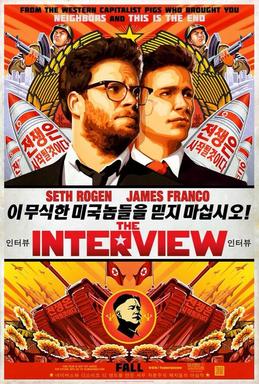
Imagining the Death of the Kim: In Defense of The Interview

Today I'm excited to bring you a guest post by my husband the Southern Baron, who shares my passion for snarky film reviews. He's currently finishing his dissertation about martyrdom, execution, and the media in 17th century England, and keeps finding ways current events aren't too different from that time. 

In 1681, an English carpenter named Stephen College was executed for treason. He wrote a poem
that “imagined the death of the King,” which by law was just as bad as assassination, since “imagination” meant a lot more than make-believe. The poem suggested that he actually wanted Charles II dead, and that was beyond the pale, especially since “imagining” Charles I’s death had led to his beheading back in ‘49. And the poem said, specifically, “like father, like son.” It didn't take an English Lit PhD to know what that meant. So the carpenter was drawn and quartered publicly in London: not a good way to go.

College had bad luck—writers got off fairly often back in the 1680s because the publisher was the first guy the government went after. And this is a key link between that old case and the whole mess around the late 2014 film The Interview and the now-infamous hack of Sony Pictures by, presumably, North Korea. But this time one state went after a “publisher” in another state. This is like printing a poem imagining the death of the Pope, and having the Swiss Guard ransack your London shop. (Or that scene in The Man Who Shot Liberty Valance.) Charles II wouldn't have let that happen. Although Sony was hacked, our “king,” President Obama, rightly said that this couldn't intimidate theaters and moviegoers. And while The Interview is literally guilty of “imagining the death” of Kim Jong-un, it doesn't really encourage viewers to kill him. The film’s underlying message is that the pen beats the sword, though you should keep your sword ready in case they launch the nukes. The movie really just attempts to start a revolution “with nothing more than a camera, and some questions,” as James Franco’s character, Skylark, tells his TV audience, almost too self-referentially. But if it is possible to imagine Kim dead, we could also imagine his regime gone, period.

This is not a great film. But as my advisor told me in our very first meeting, there are a lot of bad poems in history that English majors ignore because they are, well, bad poems—even though they are absolutely important for understanding politics and culture. Bad poems destroy governments. And North Korea knows it.

One of the most important running jokes in the entire film is classic Seth Rogen bathroom humor: the purported belief among North Koreans that Kim Jong-un lacks an anus because, in his awesomeness, he has no need to use the bathroom. This is finally dispelled (spoiler!) when, in the climactic and titular scene of the film, the Supreme Leader literally “sharts” on camera. Ha. A bit childish. Overgrown boy that I am, I admit, I LOL’d. But allow me to defend this scene, and this plot point.

The discovery, as Skylark tells him onscreen, that Kim is “just a flawed man with a big old butthole,” who “has to pee and poo just like the rest of us,” is rather profound—it destroys the constructed majesty surrounding Kim. And since it appears on live state sponsored television, all the people have to see it. The joke is similar to a case I found in which a man was in trouble for saying “The King knows no more about salvation than my arse.” The King is as dumb as a butt. And Kim, to his people’s surprise, has a fully functioning one. They are struck with disbelief—it must be a joke, they think—there must be some mistake, they say—Kim is not like us, Kim does not go to the bathroom, Kim would never soil his trousers on television! But as they see Kim weep about a Katy Perry song, in the kind of news segment that would embarrass everybody involved (demonstrating some of the dangers of live TV), they realize that he is as capable of error as anyone else. Kim, of course, still does not believe it, and from here we work our way to the infamous uber-climax, the death by exploding head of Kim, as he attempts to destroy our heroes—escaping in a Soviet tank from Stallone, er, Stalin—by helicopter, while making obscene gestures and launching nukes at the United States. That primetime celebrity gossip show just got serious like 60 Minutes.

Other details silently comment on deeply valid points about how North Korea and the US see each other. The opening scene has a smiling child, adorably dressed, singing about how “arrogant and fat” Americans should “drown in their own blood and feces.” A guard in Kim’s palace watches the interview at a security desk with a mural of an exploding Statue of Liberty behind him. This shot appears within a broader montage of people watching the interview in the two countries. Skylark’s staff are in their sleek New York office, wearing expensive suits; the CIA agents are in theirs in D.C. These shots are interspersed with North Korean viewers, who are depicted in grim, dusty rooms, wearing dull clothing, and—horror of horrors!—watching on old CRT monitors, even one with a manual dial, instead of the flat screens that have been a mark of western progress since the early aughts. Clearly North Korea is impoverished because its people lack western goods!

And while this may be an overly materialistic view, it’s one that Americans get, and it continues a timeworn but valid tradition of contrasting communist and capitalist worlds by who has cars that run. (Notably, Kim’s collection, in the film and in reality, consists of Audis and other luxury imports—the only commie car is that Soviet tank, and Kim drives it for fun while listening to...Katy Perry’s “Firework.” The entire movie might be a riff on the song.) Kim, of course, loves western goods and western entertainment, which is why he brought Skylark to his country in the first place. Skylark even shows Aaron (Rogen) on his Wikipedia app that Kim likes his show. Seeing this on the encyclopedia that anyone can edit, and on a phone, is a clever contrast with the state-imposed knowledge that North Koreans receive.

But the most obvious example of this dichotomy is the very real shortage of food in North Korea. When Skylark discovers a false grocery with wax vegetables, just after a lavish dinner with the generals, and realizes he must have seen a “fake fat kid” outside it the day before, it drives our hero over the edge, convincing him that his newfound margarita-and-babe-enjoying buddy Kim is really just, well, the male version of “honeypotting” him and screwing over his country.

Again, this is not a great film; as one review noted, Dr. Strangelove it ain’t. There are more F-bombs than nukes. It is easy to forget the prescient butt jokes because there are so many others that exist solely for the purpose of being butt jokes. Some scenes are pure filler. It is heavy on classic American male “yellow fever,” objectifying Asian women. It reinforces the idea that happiness is determined by having lots of stuff. Skylark’s excessive interest in partying is not questioned (besides his belief that the CIA’s plan to “take out” Kim must mean dinner and drinks), only the North Koreans’ limited access to the New York club scene. But culture doesn’t consist only of great art. Most people don’t see that every day, but they do see stupid shows like Skylark’s, thinking a lot more about which celebrity slept with whom than which foreign leader is oppressing his country. The film effectively challenges that preoccupation, since first Aaron and then Skylark realize they have to convey something more significant, which they are doing by the epilogue.

So, to have a Rogen-Franco flick take juvenile humor and apply it, in a surprisingly intelligent way, to the serious subject of human rights failings in North Korea, is impressive, and important. The possibility that the movie might make its way via bootleg into the North is also important—indeed, that nauseatingly self-aware implication that a revolution had started with a camera could come true in time, as Pyongyang’s control over the minds of its subjects is constantly undercut by cross-border DVD smuggling (depicted well in the 2014 Frontline episode “Secret State of North Korea,” by the way). When all you have is state-controlled television, The Interview can have some impact; and when leaders are portrayed as gods, the first step is to demonstrate that they aren’t. The subtext to all this is that propaganda is still crucial—Kim’s own propaganda minister, Aaron’s love interest, has to support them, or the plan won’t work. The TV—and not the original CIA assassination plot—is still the medium through which minds are shaped.

Back in 1681, that carpenter died for “bad art,” and in December North Korea threatened that people might die for “bad art” again. The unrelated Charlie Hebdo murders demonstrate that it remains a possibility. The Interview is guilty of imagining the death of the Kim, but Rogen and Franco don’t deserve drawing and quartering in the public square (even if they really don’t deserve an Oscar, either). That the North Korean government and its cyber-allies think Sony should suffer is all the more reason that we should watch the movie, and keep making ones that undermine injustice, even if the methods are a bit juvenile. Thoughtcrime is doubleplusungood. Be sure to try some today.

Saturday, January 3, 2015

Can We Talk About White Christmas?

"We're gonna have the hap, hap, happiest Christmas since Bing Crosby tap-danced with Danny F*%*ing Kaye!" - Clark Griswold in National Lampoon's Christmas Vacation

Happy New Year! I hope you are having a very merry Christmas season. (It's not over until Epiphany so this post isn't too late.) While there are plenty of great movies for this time of year, the one I can't miss is 1954's White Christmas. Maybe it's because it was one of the first movies I ever saw; it was one of the few VHS tapes my parents owned back in the 80s when you could rent a VCR. It just hasn't been a real holiday season until I've heard the "Sisters" song and gotten choked up at the ending's surprise reunion.

"Judy, we need to discuss your turtleneck addiction."
Over the years I've noticed and enjoyed different aspects of the movie. As a little girl, I loved Vera Ellen's style as Judy: girlish puffy sleeves, twirly skirts, and blonde ponytails. Now, I much prefer Rosemary Clooney's Betty and her womanly evening gowns. That black mermaid one at the Carousel Club would look amazing on any red carpet.

During my most recent viewing, I realized that General Waverley's backstory doesn't really make sense. His retirement from active duty in the middle of a campaign hardly seems practical at a time when the United States was waging war on two continents. Did he just age out or had he run afoul of someone at the Pentagon? Maybe his supervisors didn't approve of his performing arts sponsorship that inspired many of his troops to sing, tap dance, and later dominate show business on Broadway and in television.

I also realized how the movie's 1954 setting hints at an American culture in transition. Characters are feeling their age with declining eyesight and pants that don't fit. One song jokes about wishing for the simpler times of just following army orders. The "Mandy" number expresses nostalgia for the jokes and songs of minstrel shows, trying to adapt America's favorite racist entertainment into a technicolor cartoon of reds, purples, and greens. Bob Wallace and Phil Davis' production even throws shade on Vera Ellen's former co-star Gene Kelly, griping about all the modern "Choreography" supplanting traditional hoofers. They're following the old "Let's put on a show to save the day!" trope, but they're not kids anymore and post-war life still has challenges.

In First Things last month, Peter Leithart suggested that White Christmas also captures America's spiritual decline.
"In place of Jesus, we get a mash of mid-century Americanism ... There are good, altruistic deeds, done out of loyalty to an old friend, and from beginning to end the film glows with the warmth of post-World War II patriotism. If there’s a faith here, it’s a gospel of small-town American and faith in the decency of the American military ... Whatever one thinks of those sentiments, they don’t constitute a gospel." 
Well, sure it's not a gospel. The title song is just the results of generic sentiment + celebrity vocalist = hit single. If you base your life priorities off a Danny Kaye movie you'll go as nuts as Clark Griswold did. But there are plenty of prior Christmas songs and movies about revelry rather than baby Jesus, including White Christmas' prequel, Holiday Inn. There's no reason to single out this one movie.

In fact, White Christmas's lack of gospel pretense is what makes me find it such a refreshing holiday staple. Too often, made-for-TV Christmas movies try offer some vague inspirational lesson, so most are a tired reworking of A Christmas Carol. This secular conversion template features a workaholic (shrewish single woman or neglectful family man) who undergoes some sort of supernatural upheaval and thus embraces kindness and sacramental turkey dinners. If you just "believe" and listen to that kindly senior citizen's advice, Santa will bring you true love and that greedy businessman will stop harassing your quirky neighbors. While certainly fun, this snow-covered fairy tale shtick is a poor substitute for the Incarnation. It attempts to offer meaning through the "spiritual but not religious" archetype.

White Christmas, on the other hand, is simply fun with a dash of reality. While Bob Wallace does eventually put aside his workaholic habits to pursue romance with Betty, a magical wish doesn't make it happen. He has a successful career, but he uses his business and connections to help an old friend. When he asks people to help him, he acknowledges that not everyone might be able to change their holiday plans. (Although how did he charter those special Christmas Eve trains? That's magic.) Nobody has to summon an angel or sing a special song to make it snow; it's just nice icing on the cake after the plan comes together.


At the risk of sounding too humanistic, that's honestly how most people spend their holidays. The weather doesn't always cooperate, your job might not be going great, you might have had a misunderstanding with your loved ones. Hector Elizondo is not going to show up and solve all your problems. But you can still come together and make the best of things. Dancing and songs bring joy.

If you watch one movie about saving a ski resort this winter, make it the one with tap-dancing.

(Images taken from GlamAmor's excellent post on Edith Head's costume design for the film.)

Friday, April 4, 2014

Son of God review - Jesus Movies 2014 Edition

Read my prior roundup of Jesus movies here

This year's new life of Christ film is derived from Roma Downey and Mark Burnett's television miniseries The Bible. I hadn't seen the series, so I was curious to check out the feature-length version. There hasn't been a full-fledged Gospel theatrical release since The Passion of the Christ a decade ago. Does Son of God further advance the genre?

Pros: The story is narrated by aging St. John in exile on Patmos. His gospel's "In the beginning was the Word..." intro leads us through an Old Testament montage before diving straight into Jesus' public ministry. This is a great contextual and theological set-up.

Cons: Sadly, the initial Incarnation focus gets lost as the narrative tries to be as generic and uncontroversial as possible. Other reviews have aptly compared it to a greatest hits montage played by a cover band. It's really an amalgamation of History Channel footage, and it shows.

Notable performances: As usual, the villains are often the most interesting. Judas is a straightforward creep who becomes Caiaphas' flunky. The high priest is in turn pushed around by Pilate, whose retribution he fears. Pilate is a stone-cold meany spilling Israelite blood in between massages and reclining dinners, but deep down he's worried about his own career too. In the Sanhedrin's negotiations with Pilate about Jesus' execution, he seems to view them with the exasperation one reserves for that particularly annoying co-worker. "Why are you bothering me about this guy when he's your problem? Oh, and now you're gonna nitpick how I wrote that sign?"

There's a token pharisee who initially gets annoyed when people ditch him for Jesus, and then somehow manages to be in the peanut gallery of every scene. His escalating outrage and jealousy are pretty fun. After each miracle I expected him to blurt out a Gob Bluth "Oh, COME ON!" Speaking of obnoxious people, Thomas is among the most vocal of the Apostles, whining with doubt about everything. At one point Peter just has to tell him to shut his trap and act in faith already.

Favorite scenes: Most of the scenes are pretty paint-by-numbers, but sometimes there are creative insights. For example, the woman caught in adultery has a small child who's upset by her mother's possible stoning. This perfectly emphasizes the human dignity Jesus is defending, and shows how the woman's  sinful life was still important to others. There are some interesting Eucharistic references, like Judas gagging on unleavened bread as he flees the Last Supper or Peter rushing to say Mass as soon as he realizes Jesus is alive and they better remember him like he asked.  Possibly my favorite parts were the innovative scenes during Christ's agony in Gethsemane. The camera cuts from his anguished prayers to the Sanhedrin reciting Psalms to Pilate and his wife burning incense to their ancestors, all praying with different motivations.

What The Frankincense: Complaining that the holes in Jesus' hands didn't look "real" enough sounds really pedantic, so I'll just mention this - Cee Lo Green does the closing credits song. Which is the theologically suspect "Mary Did You Know." Umm ok? I'll take Cee Lo's tunes however I can get them.

Jesus rating: 1 out of 5. This Jesus is not only bland, he's annoying. His perfect beachy waves of hair and knowing closed-mouth smile reminded me of another resurrected TV character - Alison, the leading Mean Girl and possibly dead frenemy on Pretty Little Liars.

I mean, look at this.  
Despite the smug grins, this Jesus is surprisingly ignorant. He gets telepathic flash-forward knowledge of future events at the last minute. For instance, only after embracing Peter at his promise of loyalty does Jesus get a precog vision of denial and roosters crowing.

Even worse, this Jesus spouts trite inspirational slogans. It's like the screenwriters had to abridge the already straightforward dialogue of the Gospels. In his first scene, Christ recruits Peter not with the clever "fisher of men" line, but by saying they will "change the world." It's the worst during the Passion scenes. Instead of prophecies and the epic Last Supper soliloquy of John's gospel, Jesus speaks in glib phrases that belong on a cat poster.  John bursts into tears at predictions of Jesus death; the Master tells him to "Trust in God." When Mary meets her Son carrying the cross, he says "All things are possible with God!"

Mary was probably thinking "What things exactly? How about you not dying, is that possible? Or is this a really bad hint at the resurrection?" The Passion of the Christ did it better. Jim Caviezel's Jesus tells Mary, "See mother, I make all things new," actually explaining the purpose of his suffering. Despite his title, Son of God  doesn't offer any real answers to life's big questions of suffering, sin, and redemption. 

Cinematic value: This brings me to my final point - this movie's greatest value was how it made me better appreciate its predecessors. Son of God's knock-off imitations show the endurance of Passion of the Christ's artistic legacy. Whether it inspired you or grossed you out, PoTC did offer some innovative visuals. Son of God's Passion sequence pulls out the same set pieces but doesn't execute them as well. There's the slow-mo dramatic music for the Sanhedrin so you know they are baaaaaad guuuuuuuuuys. There's Mary watching the scourging from afar and Jesus kissing the cross before he lifts it. There's the copious blood that makes gravel stick to Jesus' unrecognizable face. Unfortunately, instead of Jim Caviezel's poignant facial expressions we just get close-ups of the bloody drool streaming from Diogo Morgado's' lower lip.

Extreme close-ups and other distracting camera tricks are really the film's undoing. Only the most hipster bar in Williamsburg is this focused on beards. By the end  I was well-acquainted with every character's facial hair follicles as well as the state of their pores. The constant zooming may have been to compensate for lackluster sets, or to lend gravitas. When scenes finally do pan out, there are indiscriminate lens flares and amateurish GCI of Jerusalem. Again, there is another film predecessor that did this better: Jesus of Nazareth. Franco Zefferelli's Jesus flick was also a made-for-TV miniseries, but that didn't stop him from shooting sweeping landscapes, dramatically lit sets, and an impressive temple courtyard.

Bottom Line: While it would be fine to show in a classroom or as a TV Easter special, this is not a Jesus movie I would go out of my way to purchase and rewatch. There's been some critical discussion of whether it's disingenuous to charge audiences big screen prices to see a previously aired television program plus deleted scenes. Downey and Burnett have responded that it's an evangelization effort; they want to get the message of Jesus out to as many people as they can. Unfortunately, their Jesus is too much of a bland nice guy to inspire lifelong devotion. 

Monday, December 16, 2013

Rest In Peace, Peter O'Toole

He's led a long, full life, but it was still saddening to hear about Peter O'Toole's passing this weekend at age 81. I came to his films only recently, but just one brush with his astounding work is enough to make you a huge fan. With his delicious British diction and ethereal confidence, the man is a boss.

Really, if you've never seen Lawrence of Arabia, what are you doing with your life? Epic ambitious desert journeys are especially good viewing in snowy weather like this week's blustery days. I'm just saying. 

Peter O'Toole also gave not one, but two incredible performances as Henry Plantagenet, a king of England often overshadowed in historical narratives by his wife (Eleanor of Aquitaine), his sons (Richard the Lionheart and John), and the saint he had killed (Thomas Becket). O'Toole makes Henry II compelling, holding his own against Richard Burton in bromantic Becket and then Katherine Hepburn in The Lion in Winter. The second film is the ultimate depiction of family holiday drama and possibly the Southern Baron's favorite Christmas movie. You can bet we will fire up that DVD in the coming days.

"HA! What shall we hang, the holly or each other?"
Even though I live for British costume dramas, I actually first met Peter O'Toole through only his voice in a cartoon. He was the hard-nosed food critic in Ratatouille, back when Pixar made clever material culture reflections on the power of objects on memory and identity. He could make a voiceover about a rat cooking casserole with Janeane Garofalo sound like the most profound reflection on the meaning of art.

Towards the end of his life, O'Toole did small roles in a few religious films, such as the prophet Samuel in One Night With the King. Instead of the powerful monarch, he was a cleric challenging a corrupt government. (He still hacks a man apart off-camera, though, in that Esther movie, in case you forgot.) The most poignant of these was his role as Fr. Christopher in For Greater Glory, the story of the Cristero war in early 20th century Mexico. (Spoiler alert: basically everyone in this movie dies.) As political conflict is heating up, the humble Padre mentors a mischievous-but-goodhearted boy and then quietly goes to his martyrdom wearing black vestments. It's as if he's saying his own Requiem, offering himself to God's mercy.

KofC.org

Peter O'Toole's miscellaneous saintly cameos have fueled some speculation about his attitude towards the Church at the end of his life. Who knows? God understands the souls He created better than we can, that's for sure. So I'll say a prayer for Peter O'Toole's soul this week, and maybe one for Lawrence and Henry as well. Those men might still be finding their way home. 

Tuesday, April 3, 2012

Girl-Power Bible Movies

This Lent I've had less time for my traditional Jesus film festival, but I have managed to catch a few Biblical epics. Somehow they've all been about Old Testament  heroines. I realized this is completely appropriate considering how prominently women feature in the Good Friday and Easter Gospel accounts.

Giorgio Vasari,
Judith and Holofernes, c.1554.
St. Louis Art Museum.
Those are the ripped shoulders of
a woman saving her people. 
Women are everywhere in the story of Holy Week. For some reason most are named Mary, and they're always present. They have a lot of feelings - there's a lot of crying - but they also get. stuff. done. When they make big displays of foot-anointing emotion, Christ is appreciative, not dismissive.Whether wiping Jesus' pained face, anointing His body, or learning about the Resurrection while the guys cower in fear, these women serve God in powerful ways. Salvation history would not be the same without them.

The ladies of the Old Testament are the same way. It's a shame there aren't more movies about them, because their stories are laden with peril, drama, romance, and even comedic timing. That's Hollywood gold, people! I get why there are no R-rated films where Judith and Jael slaughtering enemy generals, but there's a lot of untapped cinematic potential.

At a church gathering last weekend, I was astonished how many people were unfamiliar with the story of Esther, another brave woman who rescued her people from destruction. So here are recaps of four movies that do exist about Ruth and Esther. Their books of the Bible involve women in unconventional families navigating assimilation, inter-cultural marriages, legal loopholes, family loyalty, deep devotion, and life-and-death situations.

Alexandre Cabanel,
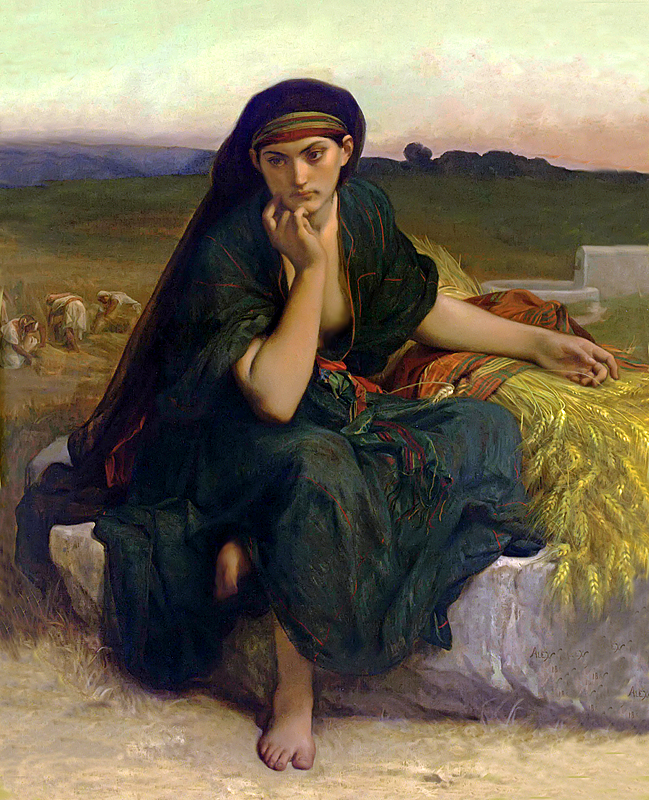
Ruth glanant dans les champs de Booz, (1886),
Musée Garinet, Chalon-En -Champagne.
Ruth dates back to the time of the Judges - she's King David's great-grandmother! She's also the first convert in the Bible. Born in Moab, she marries into an Israelite immigrant family. After famine kills all the men in the family, Ruth sticks by her mother-in-law Naomi, proclaiming "Your people will be my people, and your God will be my God." What are two widows to do? Head back to Bethlehem, where Ruth finds love with grain farmer Boaz. Another distant relative attempts to claim Naomi and Ruth's estate, but God's providence wins out in the end.


Creative License:
This film imitates the epic visual style of The Ten Commandments, and gets very creative with Ruth's backstory. Young Ruth is content living in the temple of Moab's Aztec-like child-sacrificing god, until she engages in some playful theological banter with Malon, a Jewish silversmith. He awakens her heart to God's law, but Moab's rulers are obviously not pleased by her new skepticism of their religion. After the authorities kill the men of Malon's family, Ruth and Naomi set out for Bethlehem. There, they find the kindness of Boaz but also a rival suitor and some neighbors who aren't crazy about the new pagan priestess next door.

Dramatic Themes: 
The Israelites in Moab have assimilated well, perhaps too well. Naomi's son Chilion boasts of how well he and his Moabite wife Orpah are accepted in society. Unfortunately, human sacrifice is accepted in that society. When Malon objects, his family literally says, "C'mon, you know the Moabites are sensitive about their human sacrifice."
The law and its demands are key. Malon gives Ruth a pendant of the 10 Commandments, but later the people of Bethlehem put her on trial for her pagan history. 

Huh? moments: 
Ruth spends her vestal virgin childhood in what is basically a glam convent. Seriously. She and the other girls wear matching outfits borrowed from Katy Perry. Women in long black veils oversee them and teach them to memorize prayers. Is this some anti-Catholic bias? Also, their god looks like a character from the Far Side.
Boaz is sadly less handsome than the ill-fated Malon. His tunics with thigh-high slits don't help matters.

The King of Moab inspects the glam convent. 
Overall rating: 
3.5 out of 5. 1950s silliness aside, the movie has a good pace and draws you in. If you overlook the creative additions, it's not a bad retelling of Ruth's story. I found it genuinely inspiring. 


Creative license:
Grandpa Obed narrates the story of Ruth and Naomi to a teenage David who just can't get his slingshot aim right. Naomi and her family continue to trust God, even though things look bleak and their Moabite neighbors say the gods are cursing them. (Orpah's mom is particularly obnoxious.) Both of Naomi's sons die onscreen, then Ruth and Orpah argue about whether to stay with their mother-in-law.

Dramatic Themes:
This is a matriarchal society, no doubt. Most lines are spoken by female characters, and their relationships are at the forefront. Naomi is the real protagonist of this adaptation, dispensing motherly life advice constantly. The action moves at a glacial pace, mostly because all the women take forever to finish talking about their feelings.
Huh? moments:
Costumes and sets are pretty amateur- a table is clearly a sheet of plywood, "grain" is a straw bale from a farmer's market, wooden spoons came in a 4-pack at Wal-Mart, women are all wearing mascara and mauve lipstick under their makeshift veils.
When Ruth goes off to woo Boaz at the harvest festival, Naomi gives her a "beautiful new dress" that looks like a hideous striped vest.
Pentecostal music artist Carman makes a "celebrity" cameo as Boaz. His 1980s "Sunday's On the Way" album is a cult favorite in my family, but here he looks like a skeezy lounge singer wearing Mardi Gras beads.
Overall rating:
1 out of 5. The sincerity and earnestness of this production cannot, unfortunately, hide its poor production values and bad acting. If I saw this production in a church hall, I'd be impressed; as a feature film it's unwatchable. I had to skip ahead in 20 minute increments so Naomi would get to the point. Maybe a Sunday school class could overlook the glaringly modern language and lip gloss, but they would still get bored. 

Edwin Long,
Esther, 1878,
Private Collection.
The book of Esther essentially tells two stories about Israel's Babylonian exile and diaspora. One involves political scheming and the other reads like a fairy tale.  ived a fairy tale-like story . The tale begins with some flat-out chauvinism: Queen Vasti refuses to appear before the King Ahasuerus' drunk friends, so his advisers have him divorce her. Jewish orphan Hadassah/Esther is among the young women chosen for the "find a new queen" beauty pageant. After a year-long makeover, she captures Ahasuerus' affections, but keeps her Jewish identity secret. 
Meanwhile, her cousin and foster father Mordecai has saved the king from an assassination attempt. Unfortunately, refusing to bow to ambitious courtier Haman has also won him a mortal enemy. For revenge, Haman orders extermination of all the Jews. Esther risks her life by going before Ahasuerus unbidden to expose Haman's plot and plea for mercy. She swoons, the king listens, Haman is defeated with some deliciously poetic justice, and the Jews are saved. The holiday Purim celebrates this every year.  

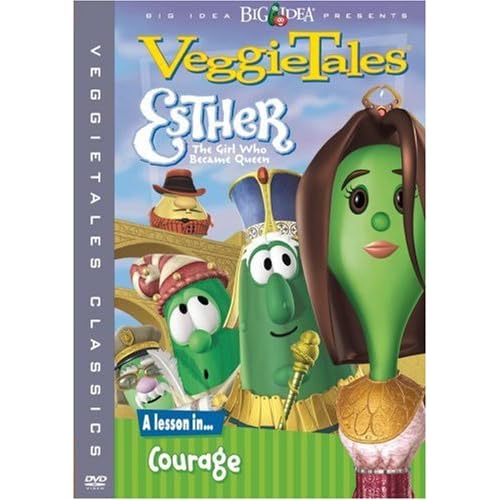
Esther: The Girl Who Became Queen (2000)

Creative license:
Yes, this is a Veggie Tales video. There are singing vegetables. Haman wears a pinstripe suit, Vashti gets thrown out for refusing to make the king a sandwich at 3 a.m, and traitors are banished to the Island of Perpetual Tickling. It's delightful.

Dramatic Themes:
The goodfella narrator starts off by talking about destiny and greatness. Young Esther is confused about her sudden destiny as queen, and begs God to show her what the point of all this is.
Since this is for young kids, the script downplays the romance. Esther is chosen because she sings well in the talent portion of the queen pageant. Her only affectionate moment with the doofus king is when he calls her "Queenie-poo."
Did I mention the gangster accents? Haman's beef with Mordecai is presented as a fight between two "families." The infamous Pea-oni brothers try to kill the King by dropping a piano on him.
Huh? moments:
Again, this is a Veggie Tales video. A scene of Haman and the King playing Trivial Pursuit while eating Chinese take-out at Esther's feast is just one of the apocryphal moments. If this bothers you, there is a chance you might take life too seriously.
Overall rating: 
4 out of 5. The colorful insanity is fun and good-natured, while the plot genuinely sticks to the main events of the Biblical account. The Book of Esther will sound very familiar to kids once they can read it for themselves.

One Night With the King (2006) 

Creative license:
This is a pretty faithful retelling of the Book of Esther that ramps up the political intrigue aspect. Minor characters get much more screen time, like the head eunuch who favors Esther. Many scenes were filmed in India, so there are lots of colorful textiles.
Despite its sensual-sounding title, this film tells a very G-rated love story fraught with the mis-communication common in romantic comedies. Esther longs to visit Jerusalem, but her priorities quickly change when she meets Fabio-like King Xerxes. Then he sees her sneaking off to meet Mordecai and assumes she's cheating, while she worries that he will cast her off like Vashti. (They should have addressed that in Pre-Cana.) Is their love doomed?

Dramatic Themes:
Again, Esther's story evokes musings on destiny and greatness. Our heroine is really named Hadassah, but Morcedai gives her a Persian name to disguise her Jewishness in the palace. Later she observes that Shadrach, Meshach, and Abednego, and even Jacob, were given new names.
The Persian Jews struggle with how much to adopt their country's ways. A visitor from Jerusalem even asks if Mordecai has sold out.
The script links Esther's secret Judaism to her necklace etched with anachronistic stars of David. It's a hokey plot device that distracts from the original drama of Haman's comeuppance.
Huh? moments:
In the biblical account Esther and Mordecai have a friend among the palace eunuchs who delivers messages for them. The script writers achieve this by having Esther's sort-of boyfriend get rounded up and castrated in a palace hiring surge. It's awkward when he begs her to escape with him and she shoos him away. (It's also incredibly awkward to explain eunuchs to your 12-year-old brother during a movie.)
Much is made of Persia's Greek enemies and their dangerous "democracy." Haman warns an angry mob that both Jews and Greeks claim "All men are created equal." I could go on all day about this historic oversimplification, but I'll spare you.
There are several notable cameos, including Omar Sharif and two LOTR alumni. Peter O'Toole gets top billing but only appears for about 30 seconds as the prophet Samuel. He spars with King Saul and then hacks the defeated King Agag apart offscreen. (It's in the Bible. Really.)
There are also some crazy hats. 
Overall rating: 3.5 out of 5. Its has a lower-budget indie feel, a cartoonishly evil villain, and too much narrative padding, but this film is still pretty to look at and heartwarming to watch. All the main elements of the Esther story are there. A confirmation class would not get bored watching.

So this Holy Week, as we sing the Stabat Mater and remember the women who mourned Christ, think of the long line of brave women who prefigured them. We daughters of Eve and of Mary have a rich heritage of love, devotion, and courage. That really ought to be on movie screens more often. 

Thursday, December 8, 2011

Immaculately Ahead of Schedule

Happy feast of the Immaculate Conception, and happy patron feast day, United States of America. Somehow it's wryly fitting that in a nation where Catholics have been so often misunderstood, and where we sometimes don't even understand ourselves, the patroness is one of the the most frequently confused theological concepts. Just to be clear, we're talking about the beginning of Mary's life here.

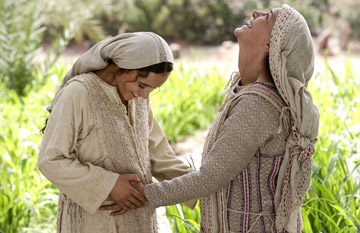
 It's also fitting that in the land that celebrates self-made success, today we remember how no one can redeem themselves - we need God's grace and redemption. God chose to redeem Mary ahead of schedule, before her Son had even been incarnate. Only one other person got this privilege. Tradition states that John was cleaned of original sin in utero, when he danced for joy at the approach of his infant savior cousin.

Visitation scene from "The Nativity Story" Via Groucho Reviews
Mary is the "first fruits" of Christ's redemption, the morning star before the sunrise, the coming attraction trailers that signal the start of the feature film. Her sinlessness is a glimmer of hope representing what Christ can do for us and what we can become.

Wednesday, October 5, 2011

Emotional Chastity: What Would Miss Austen Do?

Here is my belated contribution to this week's Bright Maidens blog topic: Emotional Chastity.

It's a rite of passage that happened every summer I worked at "high school history camp": a group of teenage girls discovered Jane Austen movie adaptations. The best reactions came from Ang Lee's exquisite 1995 version of Sense and Sensibility. (Spoiler alert, if you have been under a rock for the 200 years since the novel was written.)

Why is a good man in breeches so hard to find?
SWOON! as Willoughby scoops up injured Marianne as if she "weighed no more than a dried leaf." GASP! when he later betrays her affections. MOURN! for Elinor when Lucy Steele's "prior claims" threaten to separate her from Edward forever. CHEER! the final happy ending.

And after the credits roll, you just might pine for your own dashing waistcoat on horseback, ready to woo you with flowers, sonnets, and heroic deeds.

As much as I love movies of  Jane's books, I do have to admit that they carry a subtle temptation for women to objectify men. Instead of viewing them as complex persons, we might value them solely for their potential to give us the romantic costume-drama experiences we desire. Consider, for example, this brilliant but ridiculous video.


Taken to an extreme, this is emotional porn - just the exciting payoff without any of the patience, sacrifice, and real love that a relationship demands.

In chastity-minded circles, Austen novels are popular PG-rated romantic entertainment for young women. After all, the heroes are polite, the heroines are virtuous, and a  marriage commitment is their goal. That's all well and good, but Austen's true genius lies not in wholesomeness but in wry social commentary. One of the lessons her heroines often learn is not to be too in love with love. Heartbreak almost destroys Marianne Dashwood, while Emma Woodhouse's obsession with matchmaking blinds her to authentic relationships.

Austen's underappreciated first novel, Northanger Abbey, bases the entire plot on Catherine Morland's silly obsession with Gothic novels. Reading too many 19th century equivalents of Twilight has made her suspect horrid drama around every corner. In the end, she assumes dreadful things about her suitor and his family, putting a budding romance in jeopardy. The snarky point is clear: ladies, lay off the fiction and interact with some real people for a change.

Not gonna lie, I still love a good petticoat-filled chick flick. In his first email to me, my boyfriend got my attention by asking what I thought about the 2008 adaptation of S&S. (A shrewd move on his part.) But a week after our first date, I found myself flipping through one of those Pride and Prejudice happily-ever-after sequels at Barnes & Noble. Suddenly, the manufactured plot of Regency romance was unfullfilling. Mr. Darcy was charming enough, but he wasn't as intriguing as the red-headed southern boy whom I could learn about in hours of real-life conversation. The Beau had talents, opinions, dreams, and memories that could fill more than just one volume. I put the book back on the shelf, ready to find greater satisfaction in writing my own love story.

Friday, April 15, 2011

Seven Quick Jesus Movie Takes

For this week's linkup to 7 Quick Takes at Conversion Diary, I thought I'd mix it up and do some short movie reviews. Religious films are a mainstay of my family's Lenten season, and it feels like I've seen dozens of cinemative Jesuses over the years.
Putting the Gospels on screen is a daunting task, since the 4 Evangelists didn't give us much narrative detail. Also, there's a lot to live up to. How can an actor portray the Son of God, who is all things to all men? Does the man on screen match our own imaginings of Christ? Yet filmmakers and audiences return again and again to the well known story. It's probably because we wish we had been there, and film is the closest we'll ever get to time travel.

So here are some of my favorite imaginings of the past, in semi-chronological order.

1.The Robe (1953) 

Marcellus Gallio is a bored, dissolute centurion until he crucifies Jesus and the memories haunt him. He decides to track down his runaway Greek slave Demetrius, who became a Christian and possesses Christ’s robe. This is an action-packed yet spiritual costume piece. Brother #3’s teacher showed it in class and all the 5th graders were hooked. Fun fact: the first film released in Cinemascope.
Pros: The people Richard Burton’s Marcellus meets on his quest for Demetrius are an excellent representation of Christian community. In the second act, the film deals with martyrdom as Burton returns to Rome to hang out in the catacombs and challenge Emperor Caligula. Redemption, miracles, courage. Also Richard Burton being Richard Burton.
Cons: Richard Burton being Richard Burton – it can get distracting. His swooning girlfriend is annoying too.
Notable performances: Victor Mature gives Demetrius an air of quiet dignity, while Caligula gives Richard Burton a run for his money in the dramatics department.
Favorite Scenes: Marcellus meets St. Peter, who shares about betraying Jesus and then basically hears his confession. I also really like the crippled girl who teaches Marcellus about the redemptive value of suffering.
Jesus rating: 4 out of 5 He’s never really visible, but still very present. You can see why the other characters find him so compelling.

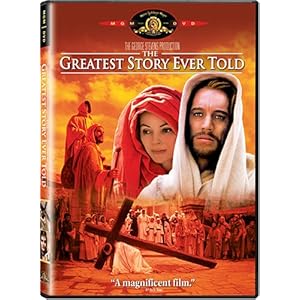
The original all-star cast Jesus epic, based on a book by Fulton Ousler.
Pros: Old Hollywood epic scale, plus cameos by nearly every actor working at the time. Sidney Poitier as Simon the Cyrene? Why not. George Stevens arranged each scene like a painting, making dramatic use of light and color.
Cons: The desert landscape is pretty obviously Arizona. There’s a surprising amount of artistic liberty in the plot, like the random Temple massacre that leaves you saying “Huh?” The carefully arranged set pieces can feel like the set of a school play.
Notable performances: Charlton Heston is a no-brainer to play firey John the Baptist. There’s also John Wayne’s infamous “Truly this man was the son of Gawd.”
Favorite scenes: Jesus heals the man born blind, who remembers knowing Him as a child. In the temptation scene Satan is a wiley old guy hanging out in a cave. Mary Magdalene travels with the disciples after her conversion.
Jesus rating: 3 out of 5. Max von Sydow is nice enough, but seems too calm and unrumpled.

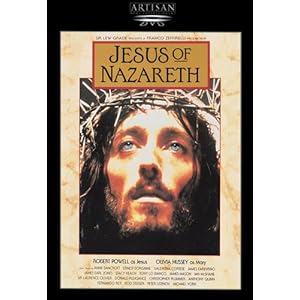
Franco Zefferelli’s longer, more star-studded version of the Jesus epic. This is the Easter time cable tv special I grew up with. (Seriously, I can recite entire scenes of dialogue.)
Pros: The miniseries format allows Zefferelli to expand the Nativity story and really flesh out characters, especially the Apostles and the Sanhedrin. Miracles and preaching get extended sequences too.
Cons: It is reallllly long. The plot loses steam in the final hour, relying on fictional scribe Zerah (Ian Holm) to explain Jesus’ arrest. The final resurrection is anti-climactic.
Notable performances: It’s really hard to pick from such a killer cast, but Peter Ustinov and Christopher Plummer are very entertaining Herods. James Farentino and Michael York and the reasons I love St. Peter and St. John the Baptist.  You also won’t forget Anne Bancroft’s Mary Magdalene, who chews up the scenery on Easter morning.
Favorite scenes: Jesus tells the story of the Prodigal Son at a party thrown by tax-collector Matthew; it inspires Matthew to abandon his decadence and reconcile with Peter. The last episode has extended scenes in the Temple, where Jesus argues with Pharisees, preaches to children, and even meets Barabbas.
Jesus rating: 3 out of 5. Amidst such a stellar crowd, it’s hard for Robert Powell to stand out. His Jesus has Shakespearean gravitas, but also detached otherworldliness. As my middle-school math teacher quipped “Half the time he looks like he’s stoned.”

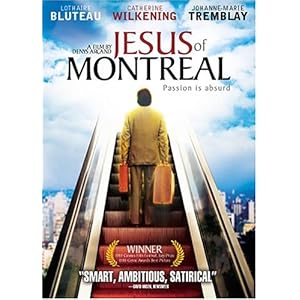
When a motley troup of Montreal actors puts on an unconventional Passion play, church authorities are skeptical but the cast find their lives transformed. Actors begin to emulate the characters they portray.
Pros: I learned about this film when a professor showed it for extra credit, and was amazed at what it said about compassion and how God can work through sinful humanity. It addresses modern life with critical eyes. Also, it’s fun to try to catch all the Biblical allusions in the plot.
Cons: Just a general disclaimer that adult maturity is needed. There’s some iffy 1980’s theology and biblical criticism in the play’s script. Also, the film is honest about the characters scandalous pasts, but that raunchy film dubbing scene was pretty gratuitous. In true European cinema fashion, there are some very brief flashes of non-erotic nudity. Basically, you might not show this to your Sunday school class, but your young adult Bible study could get a lot out of it. FYI there are subtitles.
Notable performances: Gilles Pelletier as Fr. Leclerc, the jaded priest who needs ministering to himself.
Favorite scenes: “Money changers in the Temple” – when one of the actresses is mistreated while auditioning for a skeezy beer commercial, Daniel/Jesus takes matters into his own hands. It’s a powerful testament to human dignity. The final scenes in a train station are also incredibly moving.
Jesus rating: 4 out of 5. Daniel’s performance really makes you think about Christ’s suffering and selfless love.


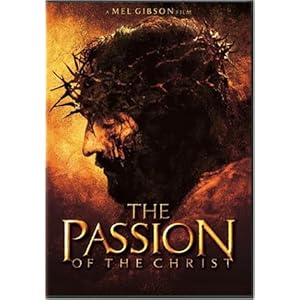
Mel Gibson’s controversial film depicts only the final day of Jesus’ life, laced with some important flashbacks.
Pros: The intense scenes are ripe for theological discussions about the ugliness of sin and the sacrificial nature of the Eucharist. The film’s steady, even pace invites a meditative mindset. The dialogue is only in Aramaic and Latin, forcing viewers to concentrate more closely. (Plus it lets you practice your high school Latin, or maybe that’s just me.)The soundtrack is exquisite.
Cons: There was hope that this would be a great evangelical tool, but without any contextual understanding non-believers are just turned off by the gore. Even for devout Christians it can be excessive, and some of the most horrific parts come from private revelations, not scripture. I think I can have a meaningful Good Friday without Gibson’s signature spurting blood for shock value.
Notable performances: Maia Morganstern is hands down the best virgin Mary I have ever seen on film. Her heartfelt yet understated performance actually made me want to pray the rosary.
Favorite scenes: There are many great vignettes: Mary watching Jesus fall, flashbacks of their life in Nazareth, the final Pieta shot. A defeated Satan and a triumphant resurrection give the story the dramatic conclusion it deserves.
Jesus rating: 5 out of 5. It’s clear that Jim Caviziel put his heart and soul into this role. In the flashbacks especially, his Jesus is joyful, loving, and sincere.

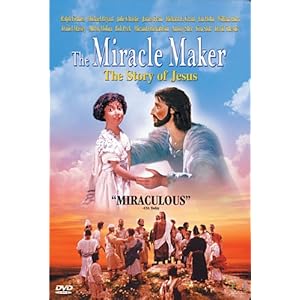
6. The Miracle Maker (2000)

An animated take on the all-star epic, told through the eyes of Jairus' daughter Tamar. This is what I'm sending my godson and his sisters for Easter this year. 
Pros: This animated film is approachable for kids, but still interesting for adults. Tamar's central role gives the narrative a family focus, and shows how Jesus inspired his followers. Claymation gives the film a great physicality, while flashback and parables in regular animation allow for some creative storytelling.
Cons: Stop motion animation isn't for everyone (even though it should be.) Mary Magdalene being freed from 7 demons might be too scary for very young children.
Notable performances:  Really great all around. The all-star British cast was actually in the same room when they recorded dialogue, so there is a real conversational tone. I liked how John the Baptist had a Scottish accent, showing his nonconformity.
Favorite scenes: When Tamar falls very ill, Jairus has to decide if going to Jesus is worth the wrath of his synagogue colleagues. I won't spoil the road to Emmaus scene, but it's wonderful. 
Jesus rating: 5 out of 5. He's confident, compassionate, and friendly.  We even get to see Him doing carpentry work and weeping at the death of John the Baptist.  Tamar has a real relationship with Him; she's not just a prop in the "suffer the little children" scene. Ironic fun fact: Ralph Finnes previously did biblical voice acting as pharaoh in The Prince of Egypt.

7. The ultimate Jesus film has yet to be made, and probably never will. Movies will never completely replicate the real thing. What really matters is how each of us individually relates to the Gospel story. The Church has a long tradition of live theater to help us mentally place ourselves within the Passion drama. This Holy Week, go to Stations of the Cross or the Liturgy of the Lord's Passion, and connect with the real Jesus, who lives beyond the movie screen.

(Update: This afternoon The Pulp.It featured this post in their daily digest of Catholic blogs. If you've come here from them, thanks for visiting!)
(Another update: holy schlamoley, New Advent featured this too! This has pretty much made my week. If I've left out a favorite film of yours, please leave a comment about it. I'd love to review a new set of films next Lent.)

All images are from Amazon.com

Tuesday, March 29, 2011

Jane Eyre: feminist chastity warrior?

Part of my Virginia weekend was seeing the new Jane Eyre film with one of my best girlfriends from high school. I hadn't read the book since we were in plaid uniform skirts, so I'd forgotten what a killer heroine Jane is. This time around I was really impressed by her moral fiber. I'm a big Elizabeth Bennett fan, but Jane has Lizzie's wit plus spiritual depth. I loved how Cary Fukanaga's adaptation prominently featured the novel's different religious ideas.  We even get to see Jane and the housekeeper saying grace over lunch! Here's how I found Jane Eyre an inspiring example of spiritual strength.

  • She is mistreated by many people during her horrible childhood, but she doesn't let their wrongs destroy her. As a child, she rightly calls out Aunt Read for hypocrisy and cruelty, but eventually forgives her. 
  • At Lowood school and later at the Rivers family home, she turns to her female friends for support and encouragement. 
  • She doesn't need a man to survive - she's happy to work hard and support herself, even in a humble job at a country school. 
  • When she does settle down, it's for a relationship of mutual self-giving and improvement. She won't settle just for being someone's assistant, no matter how noble his life goals. 
  • Experiences with insanely dogmatic Christians doesn't turn her off from religion entirely. In fact, she leaves the man she loves rather than violate her moral code. 
It's on that last point that I found this version of Jane Eyre most inspiring. The scene where she refuses to live in bigamy with Mr. Rochester is so poignant, and I loved how this film depicted it. In the 2006 Masterpiece Theater version, Rochester is in control, actually lying on top of Jane in an attempt to persuade her by making out. It seemed too over-the-top for me. In Fukunaga's version, Jane is the stronger one. She holds her head up high and keeps Rochester at arm's length while he clings to her, broken down by his past mistakes.  It's obvious she desperately wants to be with him, but, as she so wisely puts it, "I must respect myself." With a cry of "God help me!" she flees the room of temptation and heartbreak.

As a single Catholic twenty-something, I was heartened by her determined fidelity to what Rochester called "some arbitrary man's law." On the surface, it might seem like she needlessly destroyed her own happiness, but staying at Thornfield would have cost the integrity that made her so attractive to Rochester in the first place. Her self-respect is what made her a survivor; she certainly would not have been happy if she compromised it. Jane's moral courage in turn brought out the best in Rochester; he stayed loyal and compassionate to his first wife to the end of that woman's life. I was heartened to see Jane not let her emotions get in the way of her values since, let's be honest, chastity can be hard when you genuinely love someone. 

source


All in all, it's no surprise Jane Eyre continues to be a feminist icon to generations of readers. She's brave, long suffering, intelligent, self-sufficient and hardworking, a warrior for true virtue, but also capable of great love. 

    Saturday, February 26, 2011

    And the award goes to...

    Are you going to watch the Oscars tomorrow? I'm very excited because it was the The Beau's idea for us to watch together. He may prefer obscure British folk groups to Beyonce but sometimes our pop culture tastes converge.

    So classy!
    Of course I am rooting for Colin Firth to win best actor for The King's Speech. If his self-deprecating Britishness were not charming enough, in a recent interview he declared how his wife is "the most beautiful woman in the world," and how he plans on being married to her the rest of his life. You get a million bonus points, sir. 

    I'm also smitten with fourteen year-old Hailee Steinfeld. She held her own opposite Jeff Bridges in True Grit, and by all accounts appears to be a mature, cheerful, grounded fourteen year old. Check out this slideshow of her red carpet looks - ahhhh she's so cute and smiley! Her sense of style makes her look young and fun, but not skanky - I would hold that up as a role model for a preteen sister/daughter if I had one.

    I think what fascinates me with awards shows is the public suspense and joy of winning - like many Olympics medals ceremonies in quick succession. I love the looks of surprise and breathless glee on the winner's faces. It's fun to imagine what I would say in that situation.Would I be funny and memorable or just blurt out trite thanks to God and a list of producers? The closest I'll ever get is my big thesis presentation when I graduate in May. I'll be gleefully clutching an imaginary diploma while I rattle off how much the experience meant to me, and how much I owe to my classmates and teachers.


    Sunday, February 13, 2011

    The Bromantic Tale of Henry II and Thomas Becket

    Image Source
    Listen my children, and you shall hear the ballad of Becket, a bromance between Peter O'Toole and Richard Burton. O'Toole was king of the bros, spending his days partying, bagging peasant chicks, and bossing around bishops while his servants brought him snacks. His favorite wingman was Burton, who joined him on daily falcon workouts and even helped him with the essential bro tasks of bathing and grooming. They were total BFFS.

    The only buzzkill was that the chicks in O'Toole's life who weren't whores were shrews. His mom and wife just sat around in doofy hats, making tapestries and nagging him when they should be greeting him with his slippers and a fresh cocktail. He coped by complaining about how unattractive and useless his wife was. They and their screenwriter seemed to have forgotten how Eleanor left the King of France for O'Toole, giving him sweet lovin', 8 kids, and a hunk of French territory. Or how his mom Matilda had fought tooth and nail to make him king. No matter, there is no room for female agency in this story. Katharine Hepburn will have to fix that another time.

    When O'Toole made Burton the Archbishop of Canterbury, the lone-wolf wingman surprisingly took his new job totally seriously. He gave away his best Ed Hardy shirts to some homeless guys and started building a professional wardrobe of archbishop vestments. Sadly, they were not historically accurate, lacking embroidered panels of saints and madonnas. The cloth-of-gold stole with pearls was pretty good, though. You could tell he was serious because his intense Richard Burton gaze happened more often. Also, he really prayed; he didn't just wear flashy crucifixes around his neck.

    Then the disrespect started. Anyone who watches Jersey Shore knows this is the greatest violation of the bro code. O'Toole disrespected the Church courts, Burton responded with an epic candle-snuffing excommunication ceremony inspired by re-runs of Survivor. O'Toole disrespected back by threatening to arrest Burton.

    Things were getting ugly, so they went to the ultimate bro, the Pope. He talked-a-like-a-this and hung out in Italy with a crew of guidos. From the size of their cardinal robes you could tell they were juicing. Guido Pope got them to compromise, and so there was a poignant reunion horseback riding on the beach. O'Toole was all "I wish I knew how to quit you!" and Burton was all "I wish you would stop disrespecting the Church. Jesus is my bro now." When they got home, O'Toole had a meltdown of Real Housewives proportions, and everyone started to wonder exactly how he "loved" Richard Burton. You know what happened next - some other bros from O'Toole's posse went to the cathedral and slashed up Burton and his shiny vestments. O'Toole did penance, and Guido Pope made Richard Burton/Thomas Becket a saint, thus inspiring many tales of future pilgrimage roadtrips.

    So there you have it. It didn't crackle like The Lion in Winter, nor did it inspire like A Man for All Seasons. I think I'll chalk it up the empty dress syndrome that plagues so many inaccurate historical movies.

    Sunday, January 30, 2011

    Live-blogging Breakfast at Tiffany's

    I said I think I remember the film
    And I recall I think we both kind of liked it
    And I said hey, that's one thing we got.

    I've never seen this movie, even though I loved that song about it back in middle school. So tonight I snuggled up with pajama pants  and Netflix to experience a permanent fixture of American pop culture. There was no one around to hear my snide comments, so you get to read them. 

    10:00 Wait. Truman Capote wrote the novel? Interesting.
    Where is Tiffany's anyway? I better visit next time I'm in New York.
    10: 04 That column dress, updo, and jewelry are so iconic, but it's a very non-curvy silhouette. Why is this the first thing that comes to mind for elegant femininity?
    10:07 Audrey looks good in anything, even a baggy tuxedo shirt. The way her hair is piled up on her head reminds me of my VSC roommate K. 
    10:11 Her couch is a claw-foot bathtub cut in half with purple cushion and pink pillows.I want to try that in my next apartment.
    10:23 Perfume in the mail slot. Genius. She must never get utility bills.
    10:26 Sugar-mama decorator is an aspiring Dorothy Draper, what with all that damask and rococo statuary.
    10:30 So our protagonists are two lost souls, trying to make their way in the urban jungle of New York.
    10:32 A lesser actress would not be able to pull of this corny monologue about raising horses in Mexico with her brother Fred.
    10:34 Ah, the mandatory baguette sticking out of every movie grocery bag.
    10:35 Dorothy Draper wannabe (let's caller her DDW) has a crazy awesome apartment with a gloriously tacky painted Greek frieze.

    10:39 This discussion of phoniness brought to you by JD Salinger?
    10:43 Brazilian party guest wants to learn about Stuff White People Like
    10:46 How did anyone think those fake teeth on Mickey Rooney were a good idea?
    10:49 There's something Gatsby-esque about a cocktail party left by its host as the cops arrive.
    10:53 The Moon River balcony scene reminds me of Kate and Leopold when they hear that song playing nearby.
    11:00 This secret redneck husband business appeared sooner than I expected. What will happen with the rest of the film?
    11:09 Drunk woman dressed in white, locked out of her apartment after running into an ex lover. This scene was imitated in The Wedding Planner.
    11:12 Holly's tote bag has a painting of the Annunciation printed on it. I wonder if she bought it at the Met?


    11:19 Kate and Leopold also mimicked this "do fun things in New York" montage.
    11:22 Cracker Jack prizes give one "a sense of solidarity really, of continuity with the past." Too bad they don't give out whole rings any more.
    11:23 "Is that really where they have the book itself? Live?" Libraries - not half as nice as Tiffany's.
    11:26 Modern romantic comedies take note - this montage actually helps us learn about the characters. Awww, when they are happy they both have their keys.

    11:32 "I can help her, and it's a nice feeling for a change." Just like Sebastian Flyte in Africa in the middle of Brideshead, I love it.
    DDW has a great amethyst ring, but she's evil.That's right, Mrs. Robinson, he's leaving all the suits behind.
    11:41 That shot of the feather-strewn room is brilliant. There are a surprising number of blackouts in this film.
    11:44 "I'm fat as a pig." Shut up this minute young lady. Also, your Victorian rosewood furniture signaling your new domesticity is ridic.
    11:47 Oh Audrey, the pigtails are too cute. Someday if I have 9 children I'll take them to New York too.
    11:55 We've seen Holly getting dressed up/dressed down several times - there's definitely symbolism in that, the way she's putting on a glamorous front to the world.
    11:59 "You call yourself a free spirit, a "wild thing," and you're terrified somebody's gonna stick you in a cage. Well baby, you're already in that cage. You built it yourself." Somebody should have told Carrie Bradshaw that right off and spared us 6 TV seasons and two horrible movies worth of drama.

    Hooray, happy ending, I think I kinda liked it. I kept drawing parallels to a million other films - The Graduate, The Apartment, etc. Audrey Hepburn is indeed charming and beautiful in every scene, but the story is much heavier than just jewels and croissants.
    Still, I have the sudden urge to go necklace shopping....